
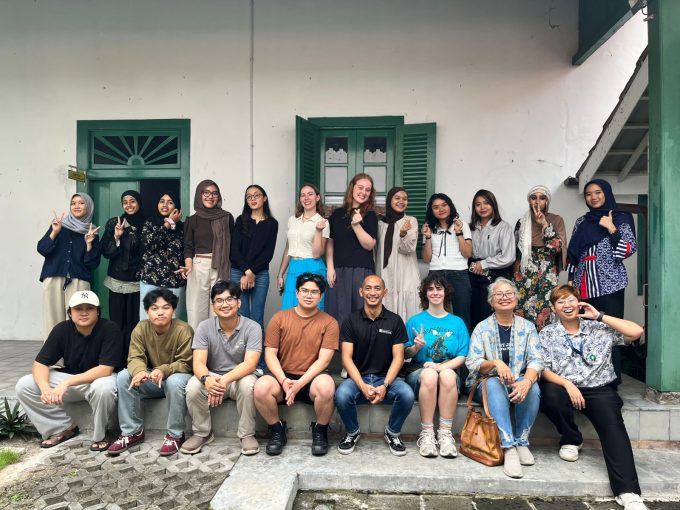
Friday, November 21, 2025 – As a city of culture and education, Yogyakarta possesses immense potential, including Kampung Ketandan. Often referred to as “Chinatown,” this neighborhood features numerous traditional Chinese-style buildings that have stood for decades, some for over a century. Universitas Gadjah Mada, through its Infill Design for Architectural Heritage (Olah Desain Arsitektur Pusaka/ODAP) course, collaborated with Curtin University, Perth, Australia, to hold a field study titled “The Cosmological Axis of Yogyakarta and Its Historic Landmarks & Ketandan Heritage Business District” at Rumah Budaya Ketandan 09. This cultural heritage building was formerly owned by Tan Jin Sing, also known as Kanjeng Raden Tumenggung Secodiningrat, inherited from his father-in-law, Yap Sa Ting Ho. Today, the building is managed by the Yogyakarta City Cultural Office and serves as the Cosmological Axis Information Center.
The activity began with a tour of the Department of Architecture and Planning (DTAP) campus at Universitas Gadjah Mada, led by the Secretary of the Undergraduate Architecture Program, Odilia Renaningtyas Manifesty, S.T., MA(UD)., Ph.D. The event continued with a campus introduction and an inter-university discussion session.
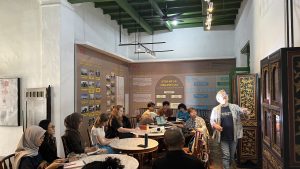
Around 10:00 AM WIB, the group departed for Rumah Budaya Ketandan 09 to begin the ODAP lecture session with course instructor Dr. Eng. Ir. Laretna Trisnantari Adishakti, M.Arch. She presented on the unique values of Yogyakarta, including the Cosmological Axis of Yogyakarta, which received UNESCO recognition in 2023. This was followed by a presentation on Ketandan as a heritage commercial district in Yogyakarta, delivered by a representative of the UGM Master of Architecture program.
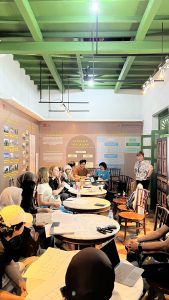
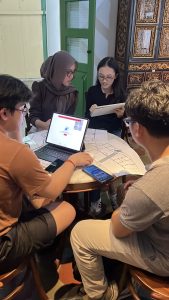
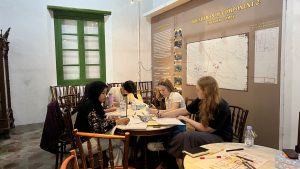
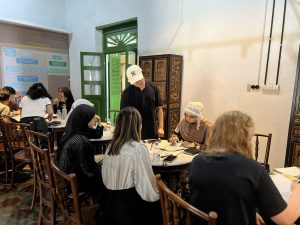
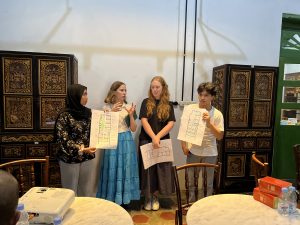
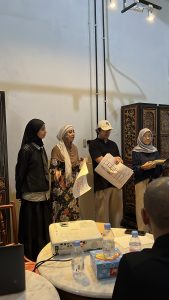
After the presentations, students from both UGM and Curtin University were divided into three groups, each guided by a facilitator from the UGM Master of Architecture program. They worked together to formulate design proposals for the adaptive reuse of Rumah Budaya Ketandan 09, which is currently not fully active. A key point emphasized by the instructor was that heritage buildings must have a commercial function to remain productive and self-sufficient in financing their own operational needs. Accompanied by facilitators, students explored both the interior of the building and the surrounding Kampung Ketandan to understand the context before brainstorming and creating presentations through both digital media and hand-drawn sketches.
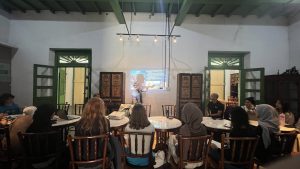
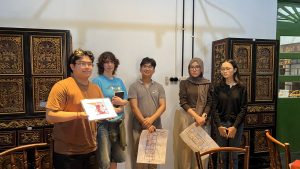
During the group presentations, students contributed brilliant ideas to revitalize Rumah Budaya Ketandan 09, including its use as a museum, cafe, restaurant, workshop space, and a venue for performing arts and culture. The presentations were interactive, allowing both lecturers and students to exchange thoughts and ask questions regarding each design.
The collaboration between UGM and Curtin University in developing ideas for heritage buildings in Yogyakarta creates a space for the younger generation across continents to contribute fresh ideas to the Yogyakarta City Government. It is hoped that this activity will enhance education regarding architecture, culture, and history to further revitalize the area, in line with the Sustainable Development Goals (SDGs)—specifically Goal 4: Quality Education, Goal 11: Sustainable Cities and Communities regarding the preservation of cultural heritage, and Goal 17: Partnerships for the Goals through international academic collaboration.
____
Reported and photographed by Nisrina Amalia Paramanindya.